
Introduction
Banksy is a pseudonymous England-based street artist whose real identity has remained one of contemporary art’s most closely guarded secrets, captivating audiences worldwide with politically charged murals and installations. Since emerging in the early 2000s, this mysterious figure has transformed street art from underground rebellion into a globally recognized artistic movement, all while maintaining an intentional distance from the traditional art establishment. The purpose of this article is to examine Banksy’s profound impact on modern art and explore the artist’s complex, sometimes contradictory relationship with commercialization a tension that defines much of their career and raises important questions about the nature of artistic authenticity, resistance and compromise.
Background
Origins in Bristol
Banksy’s artistic journey began in Bristol, England, a city with a rich graffiti and street art culture. Growing up in this creative environment during the 1980s and 1990s, Banksy was exposed to both punk rock rebellion and the emerging hip-hop influenced graffiti scene. Bristol’s working-class ethos and tradition of political activism deeply influenced the artist’s worldview, shaping a commitment to using art as a vehicle for social commentary rather than personal gain. Early experiences with the underground art scene taught Banksy the power of public spaces as canvases for challenging authority and questioning societal norms.
Evolution and Early Career

Banksy’s transition from traditional graffiti to stencil-based art marked a crucial turning point. The stencil technique allowed for faster execution, greater detail and a distinctive visual signature that became instantly recognizable. By the late 1990s, Banksy began gaining attention beyond Bristol, with pieces appearing in London and eventually spreading internationally. The artist’s breakthrough moment came in the early 2000s when galleries and collectors began recognizing street art as legitimate contemporary art worthy of museum walls and serious critical attention.
The Art of Banksy
Iconic Works and Their Meanings
| Artwork | Year | Location/Context | Primary Themes |
|---|---|---|---|
| Girl with a Balloon | 2002 | London, later iconic stencil | Loss of innocence, hope slipping away, childhood vulnerability |
| The Flower Thrower | 2003 | Bethlehem separation wall | Non-violent resistance, love as a weapon against conflict, Palestinian struggle |
| Dismaland | 2015 | Weston-super-Mare, England | Critique of consumer culture, dark parody of theme parks, social inequality |
| Migrant Child with Slingshot | 2020 | Port Talbot, Wales | Immigration, childhood resilience, power dynamics |
| Rats Series | Various | Worldwide | Urban decay, survival, vermin as metaphor for overlooked populations |
Thematic Exploration
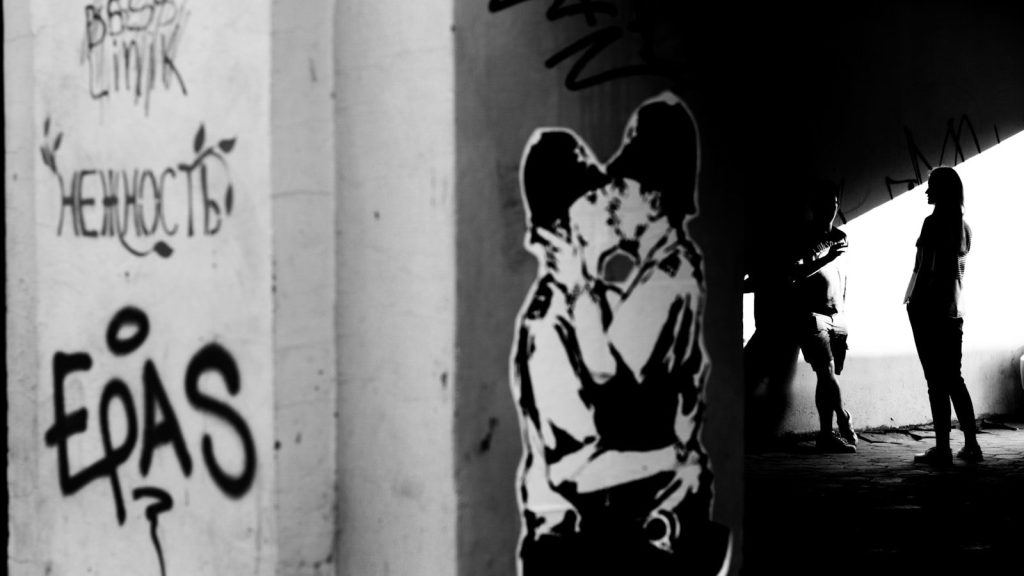
Banksy’s work consistently interrogates power structures, militarism, inequality and the commodification of human experience. The artist employs satire, dark humor and visual irony to make complex political ideas accessible to broad audiences. Rather than creating art solely for gallery-goers, Banksy places work in public spaces where ordinary people encounter it unexpectedly, democratizing access to high-concept artistic commentary.
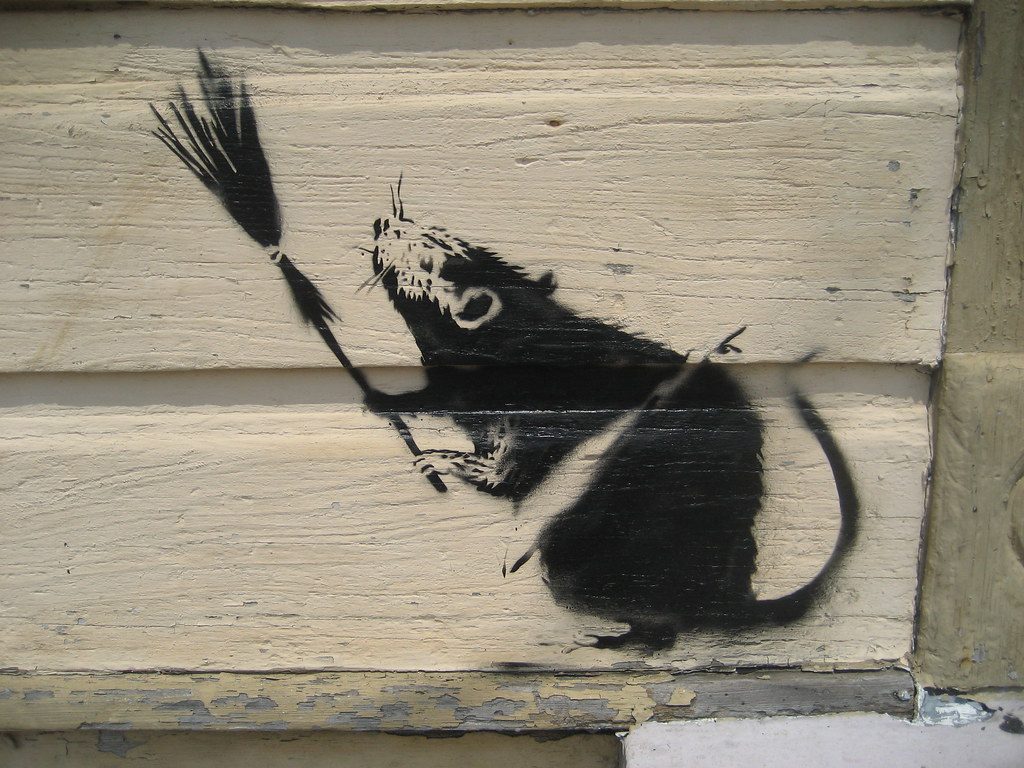
The recurring motif of rats in Banksy’s work exemplifies this approach. These rodents function as symbols of urban survivors, creatures society deems worthless yet possess remarkable adaptability and resilience. Similarly, Banksy’s depictions of children often juxtapose innocence with harsh realities: a child throwing a flower as a weapon, a girl releasing her balloon into an uncertain future. These images resonate emotionally while prompting viewers to confront uncomfortable truths about war, loss, and social injustice.
Blending Satire with Social Commentary
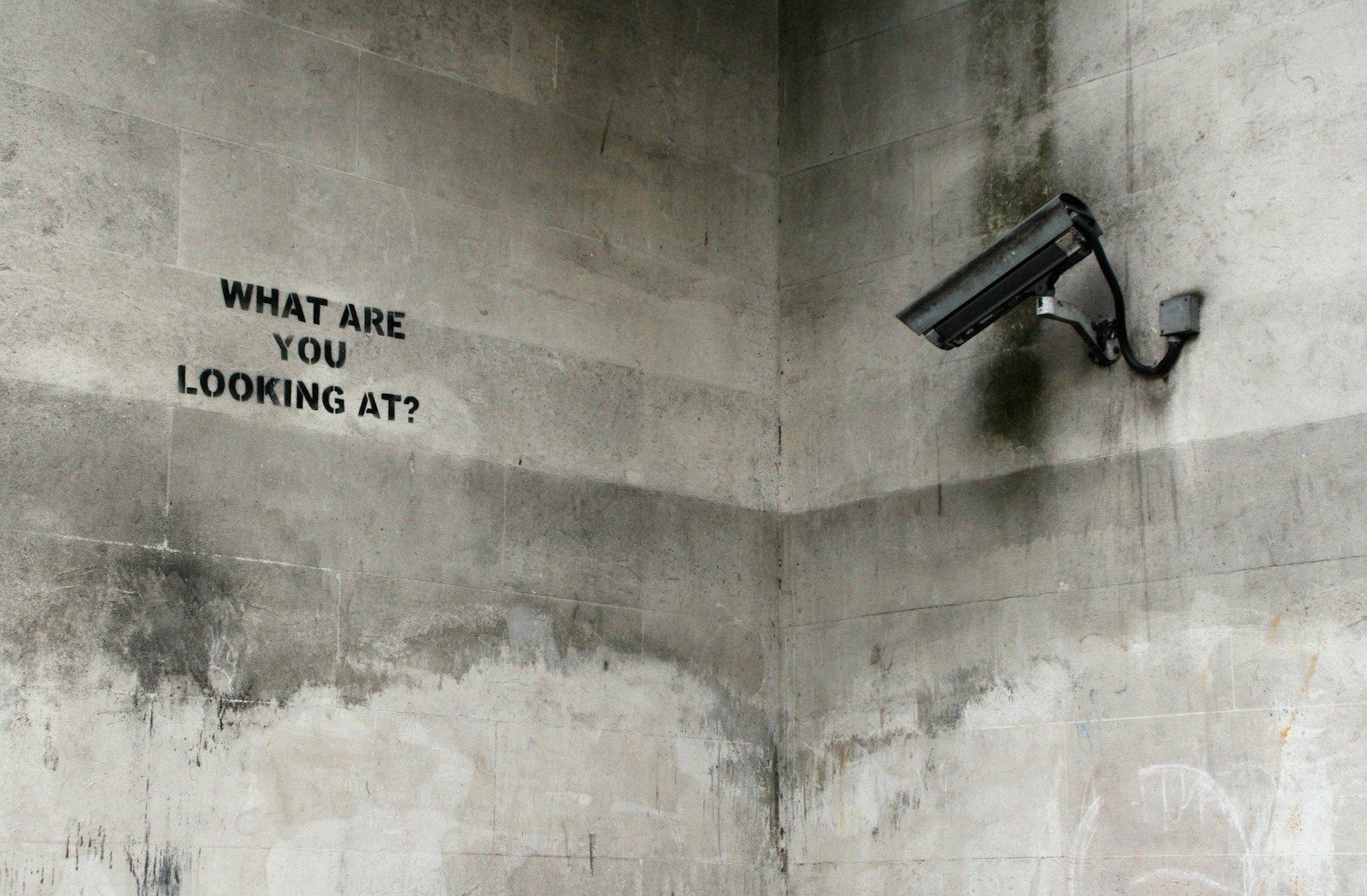
Banksy’s genius lies in the ability to make viewers laugh while simultaneously confronting them with serious critique. A stenciled image of a security guard checking a briefcase carried by a rat becomes simultaneously absurd and pointed commentary on labor exploitation. A child reaching toward a surveillance camera becomes both whimsical and dystopian. This tonal duality allows Banksy’s work to function on multiple levels, appealing to casual observers while rewarding deeper analysis from those who engage critically with the messages.
Impact on Modern Art
Legitimization of Street Art
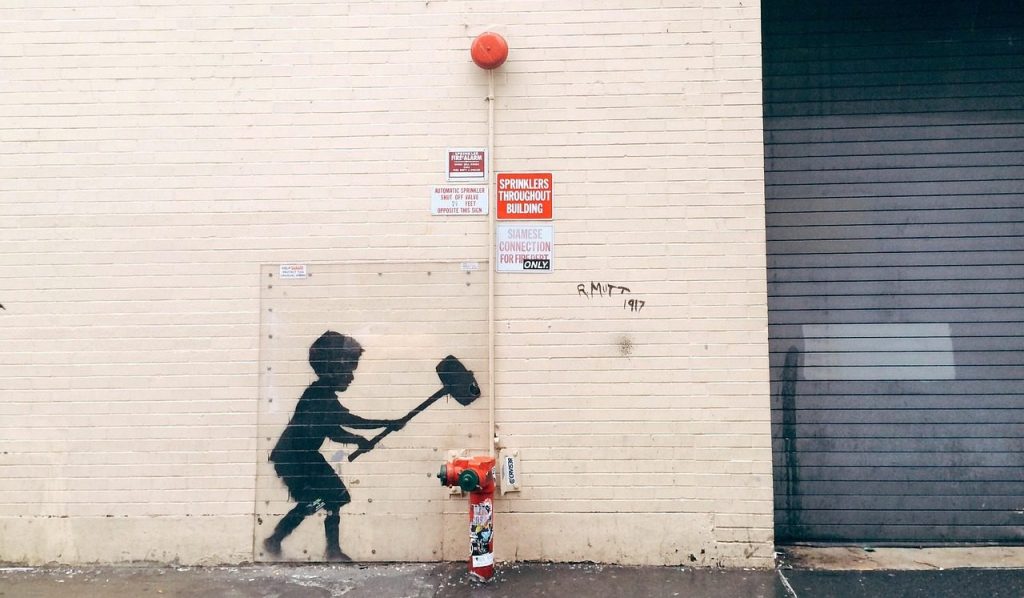
Banksy’s rise coincided with and significantly accelerated the transformation of street art from illegal vandalism into respected contemporary practice. Museums that once dismissed graffiti as urban blight began acquiring Banksy pieces. Major galleries mounted exhibitions dedicated to the artist’s work. Collectors paid increasingly substantial sums for authenticated pieces. This shift didn’t happen in isolation, other street artists like Shepard Fairey and JR contributed to this movement but Banksy’s combination of technical skill, conceptual sophistication and media savvy made the artist the public face of street art’s legitimization.
Influence on Contemporary Artists
The ripple effects of Banksy’s success are visible throughout contemporary art. Countless artists now employ stencil techniques, create politically engaged street art, or adopt pseudonymous personas inspired by Banksy’s model. The artist demonstrated that one didn’t need institutional approval or formal training to create work that challenges audiences and influences culture. This democratization of artistic authority has empowered emerging artists worldwide to claim public space for their messages.
Major Exhibitions and Events
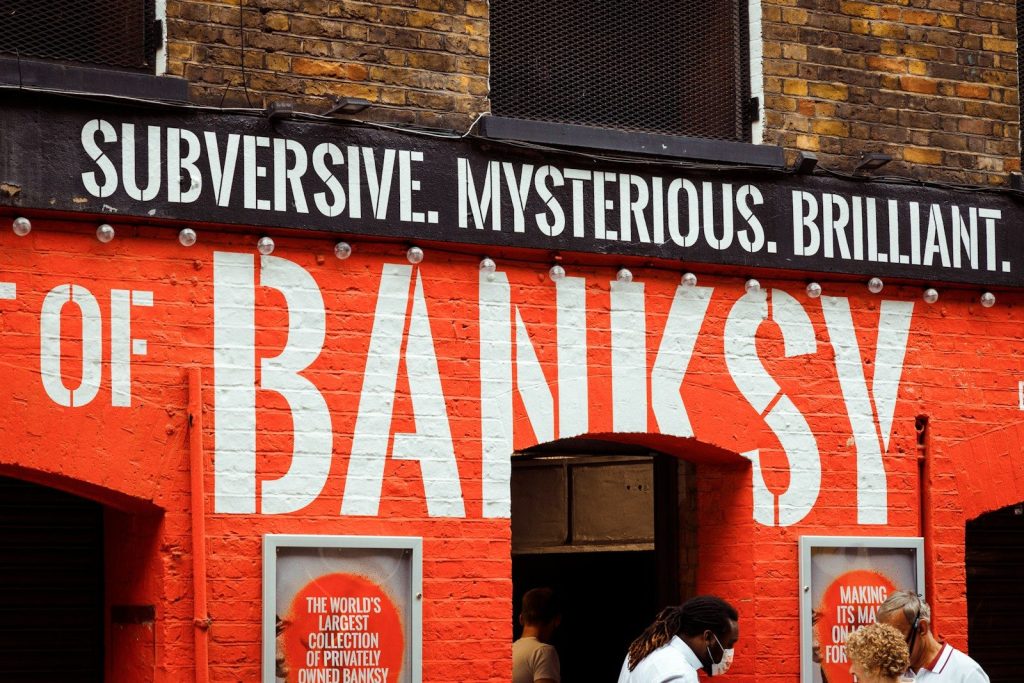
“Barely Legal” (2006) in Los Angeles marked a watershed moment, transforming a warehouse into an immersive Banksy experience that blurred boundaries between street art and gallery exhibition. “The Art of Banksy” touring exhibitions brought the artist’s work to audiences globally, though Banksy’s complicated relationship with these exhibitions, sometimes disavowing them or expressing ambivalence, highlighted tensions between the artist’s anti-establishment stance and the commercial machinery required to reach mass audiences.
The Fight Against Commercialization
Banksy’s Philosophy on Art and Commerce
Banksy has consistently articulated skepticism toward the art market’s commodification of creativity, viewing it as fundamentally corrupting to artistic integrity. In interviews and through artistic choices, the artist has expressed disdain for the idea that art should be packaged, priced, and sold like consumer goods. “The art world is a con game,” Banksy has stated, criticizing galleries and collectors for treating art as investment vehicles rather than meaningful expressions meant to provoke thought and inspire change.
This philosophy extends beyond mere rhetoric. Banksy has actively resisted commercialization through both artistic practice and public statements, creating work specifically designed to challenge the very systems that profit from art’s commodification.

The “Girl with a Balloon” Incident
Perhaps the most dramatic instance of Banksy’s resistance to commercialization occurred in October 2018 at Sotheby’s auction house in London. When “Girl with a Balloon” sold for £1.4 million, a shredder hidden within the frame’s base activated immediately after the sale, partially destroying the work. This act of artistic sabotage became a statement against art market speculation and the reduction of meaningful work to financial assets.
The incident sparked global conversation: Was this performance art? A protest against commercialization? An act of vandalism? The work’s title changed to “Love is in the Bin,” and paradoxically, the partially shredded version became even more valuable and sought-after. This outcome, where an anti-commercial gesture itself became commodified, exemplifies the paradox at the heart of Banksy’s career: resistance to commercialization, when performed by a famous artist, often becomes absorbed into the very commercial system it critiques.
Unauthorized Sales and Gallery Resistance
Banksy has created art specifically designed to remain in public spaces, resisting removal and privatization. The artist paints on walls, bridges, and public infrastructure, locations where the work cannot be easily sold or collected. When pieces are removed (sometimes by property owners seeking to monetize them), Banksy has publicly criticized this commodification, viewing it as a betrayal of the work’s original purpose and message.
Simultaneously, Banksy has occasionally authorized gallery exhibitions while maintaining ambivalence about them, sometimes disavowing shows or refusing to participate in their promotion. This complicated stance reflects genuine tension: the desire to reach audiences versus discomfort with institutional legitimization and commercial framing.
Critiquing Consumer Culture
Much of Banksy’s work directly attacks consumerism and the commodification of human experience. Pieces depicting people as walking shopping bags, children reaching toward corporate logos, and satirical takes on famous advertising campaigns all challenge viewers to recognize how consumer culture shapes identity and values. The irony that Banksy’s critiques of commercialization have themselves become highly commercialized is not lost on either the artist or attentive viewers.

Public Reception and Controversy
Critical Acclaim and Popular Appeal
Banksy’s work has achieved rare status: serious critical respect alongside genuine popular appeal. Art institutions recognize the artist’s technical skill and conceptual sophistication. Simultaneously, people without formal art training connect emotionally with Banksy’s images and messages. This dual appeal reflects the artist’s success in creating work that functions across multiple registers, as beautiful imagery, as political statement, and as cultural commentary.
Legal Issues and Public Debate
Not all reception has been positive. Banksy’s work, created without property owner permission, has resulted in legal challenges and arrests (though the artist’s identity has remained officially unconfirmed in legal proceedings). Some property owners view Banksy’s murals as vandalism; others celebrate them as public art that increases property values and cultural prestige. This contradiction highlights broader societal ambivalence about street art: is it criminal activity or legitimate artistic expression?
The Commercialization Paradox
Perhaps the most significant controversy surrounding Banksy concerns whether the artist’s resistance to commercialization is authentic or hypocritical. Critics point out that:
- Banksy’s work sells for millions despite anti-commercial rhetoric, creating wealth and status for the artist
- Gallery exhibitions and museum acquisitions contradict stated anti-establishment positions
- Merchandise featuring Banksy’s images circulates commercially, often without the artist’s authorization but generating profit for sellers
- The artist’s anonymity itself has become a marketable brand, driving interest and value
Defenders argue that Banksy navigates an impossible paradox: to reach audiences and influence culture requires some engagement with commercial systems, yet that engagement inevitably compromises stated principles. The artist’s continued creation of public art, often at personal legal risk, demonstrates commitment to art’s social function beyond market value.
Legacy and Lasting Impact
Banksy’s legacy encompasses both artistic achievement and philosophical challenge. The artist demonstrated that street art could be technically sophisticated, conceptually rigorous, and culturally significant—fundamentally changing how institutions and audiences value this work. Beyond artistic innovation, Banksy modeled a form of artistic practice grounded in social responsibility, insisting that art should engage with real-world injustices rather than retreat into aesthetic formalism.
Ongoing Relevance
In an era of deepening inequality, perpetual conflict, and accelerating environmental crisis, Banksy’s work remains urgently relevant. The artist’s critiques of militarism, surveillance, and consumer culture speak to contemporary anxieties. Recent works addressing migration, pandemic isolation, and environmental destruction demonstrate Banksy’s continued engagement with pressing social issues. The artist refuses the comfortable position of established success, instead maintaining an outsider stance and continued risk-taking.
Reflection on Art and Society
Banksy’s career ultimately asks crucial questions about art’s role in society. Can art create meaningful change, or does it merely provide cathartic release for those already sympathetic to its messages? Can artists maintain integrity while engaging with commercial systems? Should art be accessible to everyone, or does accessibility require compromises with institutional power structures? These questions have no easy answers, but Banksy’s work insists we ask them seriously.