

In the scorching summer of 1982, Jean-Michel Basquiat at just 21 years old burst onto the New York art scene with a solo exhibition at the Annina Nosei Gallery in SoHo. The show was an overwhelming success, with many of the works selling out on the opening night. Among them was Untitled, a painting that would later fetch $110.5 million at auction, making Basquiat the artist behind one of the most expensive artworks in the world. This meteoric rise was the culmination of a life marked by both brilliance and turmoil. Basquiat shone a spotlight on the complexities of race, identity and artistic expression.
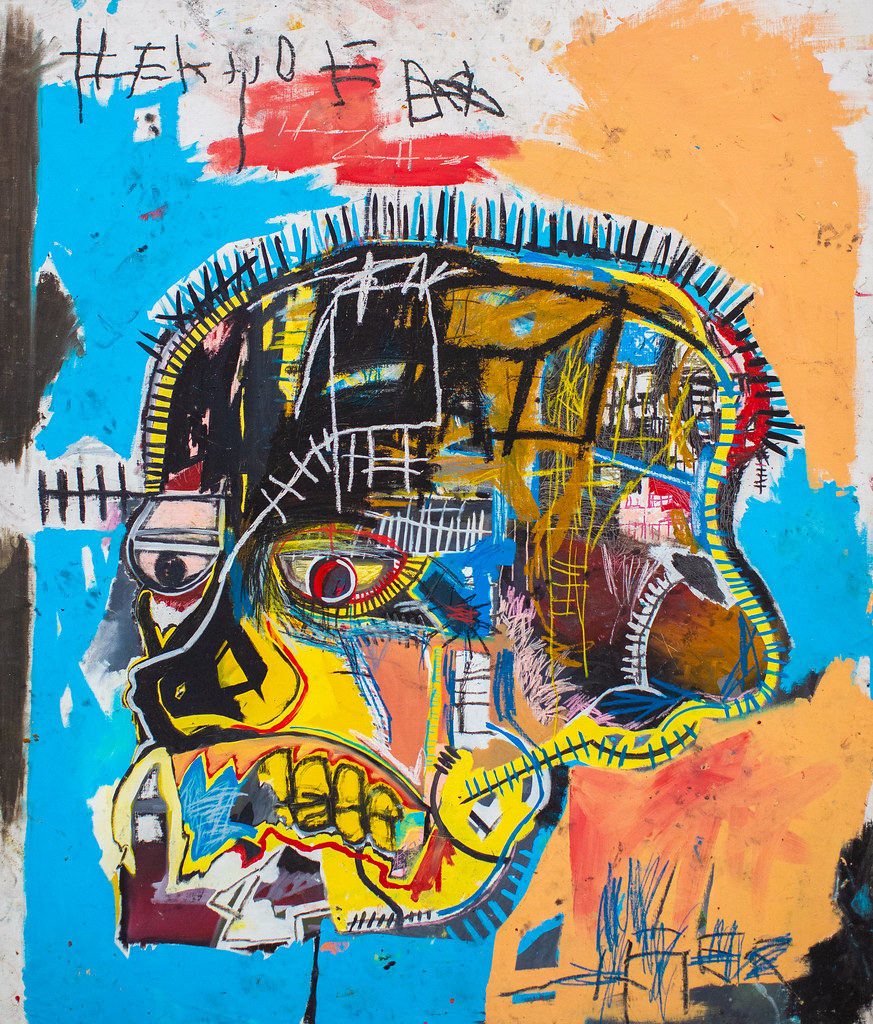
Born in 1960 in Brooklyn, New York, to a Haitian-American father and a Puerto Rican mother, Basquiat grew up in a multicultural environment that would profoundly influence his art. His mother, Geraldine, an accountant, encouraged his early interest in art. His father, Gerard, a Haitian-American poet and painter, exposed him to the works of African and Caribbean artists. At the age of seven, Basquiat was hit by a car while playing in the street, an accident that left him with a traumatic brain injury and a lifelong struggle with addiction.
In his teenage years, Basquiat turned to graffiti as a means of self-expression, tagging buildings and subway trains with his pseudonym, SAMO (Same Old). This early work was characterized by its raw energy and biting humor, as seen in his iconic phrase, “I am a child prodigy.” As he transitioned to painting, Basquiat’s style evolved, incorporating elements of Neo-Expressionism, jazz, and art history. His signature motifs including crowns, skulls and text, became a hallmark of his work. These were often layered over bold and colorful backgrounds.
Basquiat’s artistic development was shaped by a range of influences, from the abstract expressionist Cy Twombly to the jazz musicians he idolized, such as Charlie Parker and Thelonious Monk. His African and Caribbean heritage also played a significant role, as he drew on the rich cultural traditions of his parents’ homeland. This eclectic mix of references is evident in works like Dustheads (1982), a painting that features two graffiti-inspired figures with skeletal faces, surrounded by vibrant, abstract patterns.
The 1980s were a pivotal time for Basquiat, as he gained recognition and acclaim within the art world. His relationships with artists like Andy Warhol and Keith Haring helped to solidify his position and his work was championed by dealers like Annina Nosei and Mary Boone. However, this rapid rise to fame came with its own set of challenges, Basquiat struggled with addiction, fame and the pressures of the art market.
One of the most significant collaborations of Basquiat’s career was his work with Andy Warhol, with whom he produced a series of paintings that blended their respective styles. Oxidation (1988), for example, features a Warhol-esque image of a Campbell’s Soup Can, overlaid with Basquiat’s characteristic text and symbols. This fusion of high and low culture helped to further establish Basquiat’s reputation as a leading figure in the art world.
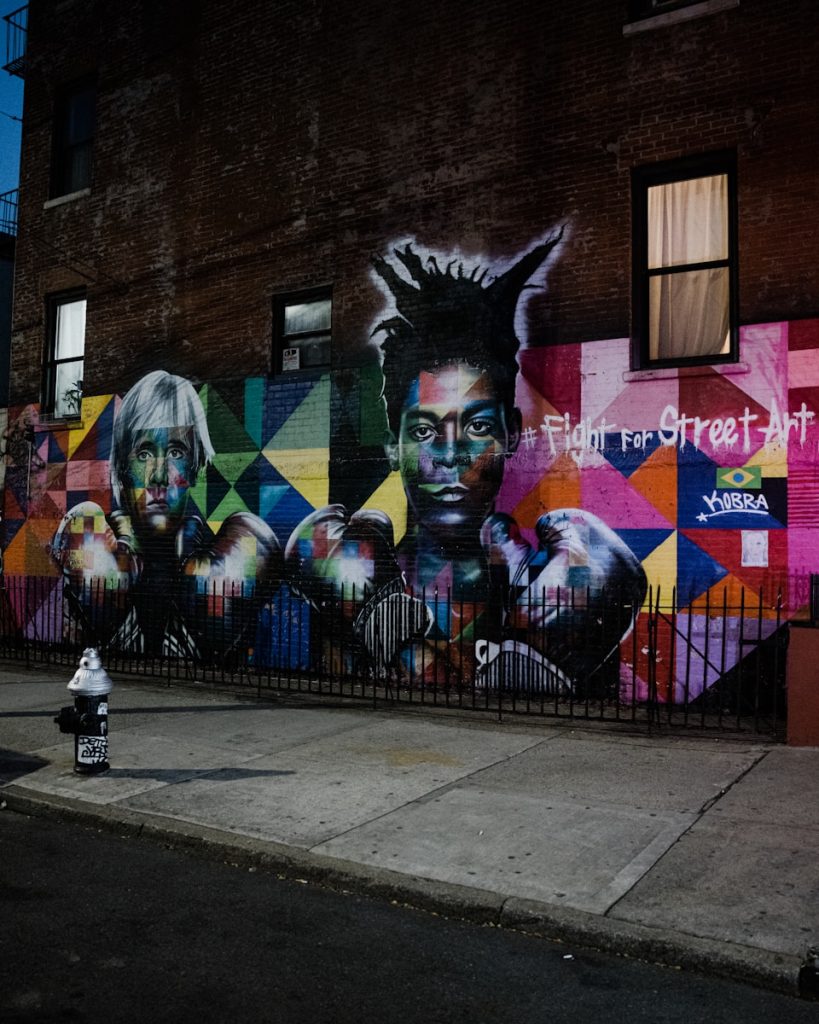
Beyond the art world, Basquiat’s imagery and persona have had a lasting impact on popular culture. His work has been referenced in music, film and fashion, with artists like Kendrick Lamar and Kanye West drawing on his visual language. When Basquiat’s painting Untitled (1982) sold for $110.5 million at auction, it made him the first African-American artist to break the $100 million mark.
Despite his commercial success, Basquiat’s work has also been subject to controversy and criticism. Some have argued that his art is too raw, too unrefined or too focused on his own personal experiences. Others have questioned the role of his dealers and collectors in shaping his career, suggesting that he was co-opted by the very market he sought to critique.
At the heart of Basquiat’s work lies a complex exploration of themes and meanings, from race and identity to class and colonialism. His use of language and semantics was a key aspect of his practice, as he drew on a range of sources, from graffiti to art history, to create a unique visual vocabulary. In Riding with Death (1988), for example, Basquiat depicts himself riding a horse, surrounded by symbols of mortality and the transatlantic slave trade.
In recent years, Basquiat’s legacy has continued to grow, with major exhibitions and retrospectives at museums around the world. His work can be seen in public collections at the Broad Museum in Los Angeles, the Whitney Museum of American Art in New York, and the Tate Modern in London. As the art world continues to grapple with issues of diversity, equity and inclusion. Basquiat’s work remains a powerful reminder of the need for nuanced and multifaceted representations of culture and identity.
In Basquiat’s life and work, it is clear that his contradictions, his brilliance and his turmoil, his raw energy and his refined technique, are a key part of his enduring appeal. His art continues to speak to contemporary conversations about race, authorship, and the commodification of culture, offering a complex and multifaceted vision of the world that is both challenging and inspiring.
Where to find more-
- Jean-Michel Basquiat by Phoebe Hoban (1998)
- Basquiat: A Quick Killing in Art by Franklin Sirmans and Olivier Berggruen (2017)
- The Whitney Museum of American Art, New York: www.whitney.org